How House Music Became a System Beyond the Dance Floor
House Music Is Not a Scene. It’s a System
House music is often misread.
To many, it sounds repetitive. Background. Something to play, not to feel. A mood, not a movement.
But that reading misses the point. It overlooks what house is doing — not just how it sounds.
House is not a genre. It’s a system — a long-form technology for regulating time, movement, attention, and collective behavior. It didn’t emerge to perform for audiences. It emerged to solve problems.
Overstimulation. Disconnection. Ego. Fragmentation. Spectacle dependency.
Where most modern music accelerates these, house resists them. It softens them. It replaces them with structure, rhythm, and coherence.
This is why house persists — and why it moves with people long after trends die out.
House is not content.
It is a system — for being human, in rhythm, with others, beyond the dance floor.
Time System: Why House Music Doesn’t Rush or End — It Loops
House music doesn’t behave like most music.
It doesn’t sprint. It doesn’t peak early. It doesn’t beg for attention.
The average tempo of house music — between 118 and 124 BPM — is narrow by design. That range doesn’t push adrenaline. It invites sustained presence. It holds people there, not to trap them — but to free them from the manic pace of modern time.
Repetition is not laziness. It’s temporal design.
Loops stretch time perception. They pull dancers into the present. Without defined beginnings or endings, house creates durational flow — something between trance and memory. You don’t measure a house set in songs. You measure it in states.
House doesn’t track time. It transforms it.
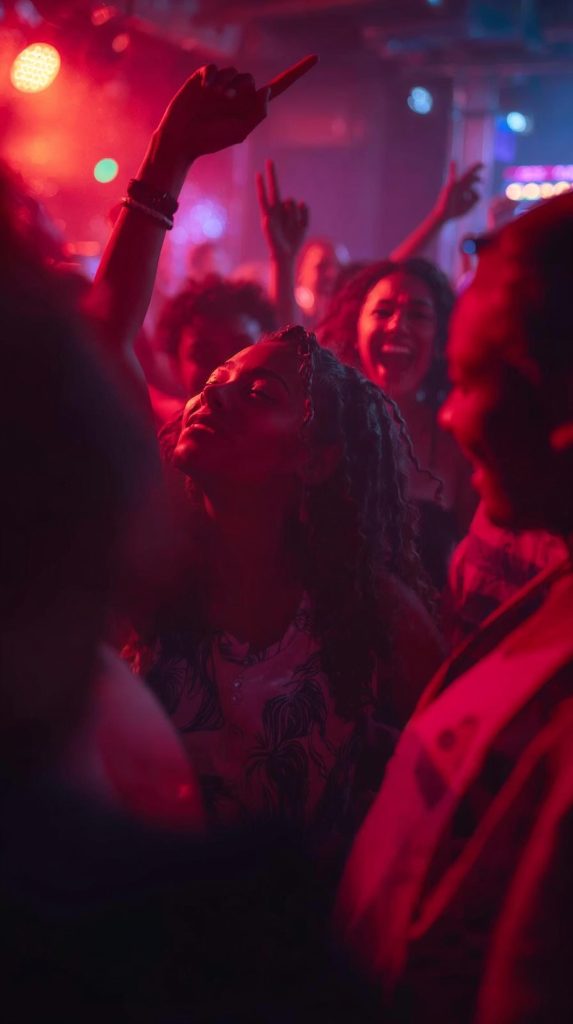
Body System: Why You Feel It in Your Bones Before You Think It
House isn’t built for passive listening. It’s built to inhabit.
The human body responds to rhythm before it processes melody. House music uses this biological truth as a foundation. Swing microtiming — the slight delay in notes and percussion — creates a groove your body interprets, even when your mind doesn’t.
The off-beat hi-hat. The syncopated bassline. The subtle variations inside the loop.
These aren’t flourishes. They are tools of physical entrainment.
House music builds movement patterns that avoid fatigue. There are no sudden spikes, no breakneck drops, no violent shifts. The energy is stable, circular. It invites you in — and lets you stay.
In house, the mind stops managing. The body remembers.
Space System: Why House Music Culture Happens in the Dark
The dance floor is not a stage. It’s a container.
House music emerged in environments designed to suppress ego and encourage immersion. Low lighting, minimal visuals, and purpose-built sound systems were not aesthetic choices — they were functional decisions to engineer space.
In the dark, you stop performing. You return inward.
With no visible “center,” the crowd becomes collective space, not a hierarchy of visibility.
High-fidelity sound systems weren’t about loudness. They were about texture, depth, and clarity — enough to let the body feel the architecture of the sound.
House music doesn’t just fill space. It restructures it.
Social System: Why the DJ Isn’t the Star — The Floor Is
House music was never designed to elevate stars. It was designed to dissolve separation.
The DJ is not the main character. They are the facilitator — an architect of the room’s energy. A good house set doesn’t demand attention. It maintains continuity. It supports the room like a circulatory system, not a spotlight.
The dance floor itself rejects hierarchy. There’s no front row. No stage. No VIP section that matters. You lose track of who’s who — and that’s the point.
The energy unfolds slowly. There is no “drop.” There’s no chorus to wait for. The arc is collective, not event-driven. Emotional movement happens over hours, not seconds.
House teaches us to move together — not to perform alone.
Know House — A Living System
Built to Be Lived, Not Just Heard
Everything described here is embedded in the track “Know House.”
It wasn’t made to entertain. It was made to sustain — to function as a rhythmic environment, a temporal tool, a body-based invitation to stay.
There’s no spectacle. No climax. No hook to grab attention.
Just a long-form system of feeling, breathing, and moving — together.
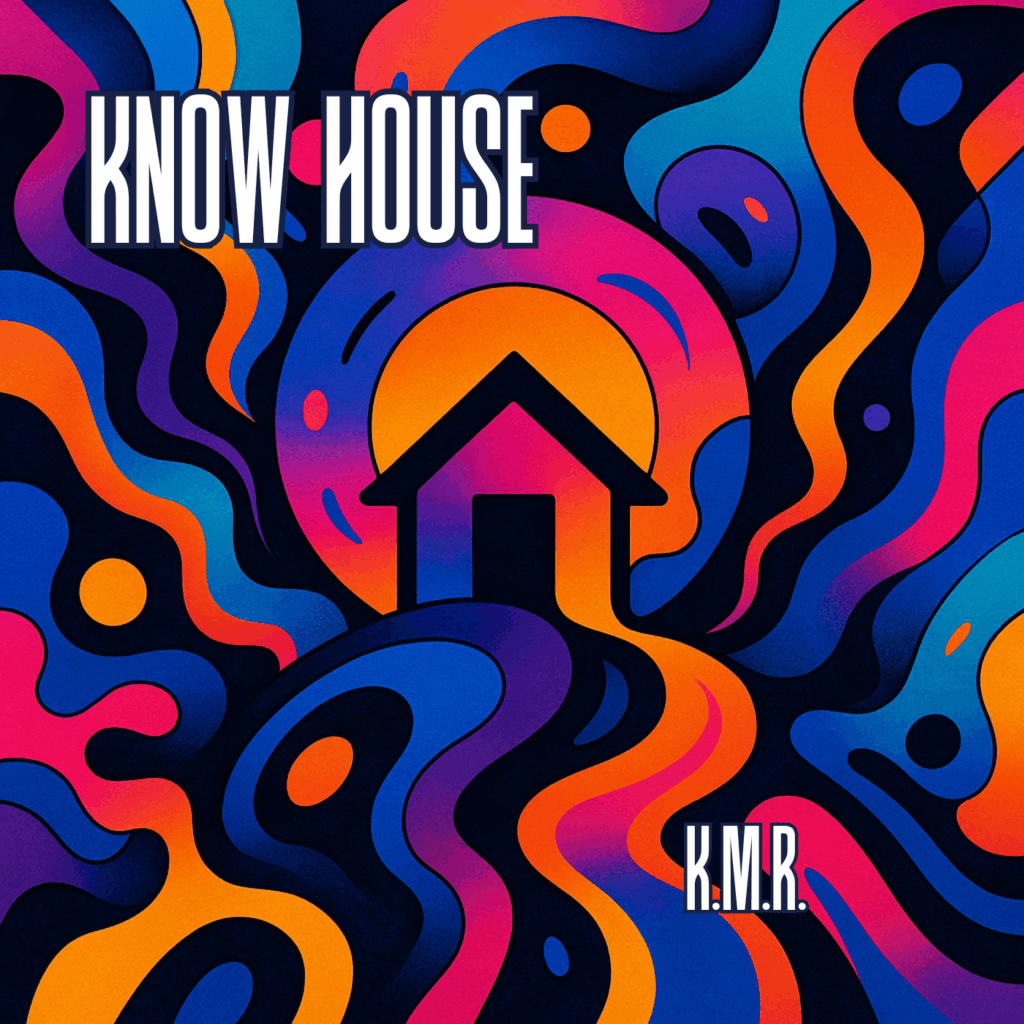
Know House is available now as an exclusive pre-release via
KMR Music
The full Spotify release drops on 2/8/2026.
Lifestyle System: Why House Music Attracts People Who Live Outside the Feed
House music doesn’t chase attention. Neither do the people who love it.
The ones who stay — long after the lights should come on — aren’t looking for spectacle. They’re looking for structure. They’re looking for something that makes time make sense again.
That’s what house offers.
It’s not fast food for the ears. It’s not for short sets or quick fixes.
House music is a long-form practice — the same way meditation, writing, or walking can be. It doesn’t entertain you. It meets you.
That’s why house listeners often live late. Not just by clock, but by instinct.
They’ve learned that the most meaningful things don’t happen fast — and they don’t announce themselves.
Why House Music Is Misunderstood
Many people don’t get house. That’s expected.
We’ve been conditioned to expect attention-grabbing moments.
Songs are short. Videos are shorter. Hooks arrive in 8 seconds or less.
House does the opposite. That’s why it’s so often dismissed.
- “It’s boring.” → It’s built for low-stimulus environments. That’s the design.
- “Nothing happens.” → Exactly. Continuity is the event.
- “It’s repetitive.” → Loops entrain the nervous system and stabilize attention.
- “It’s background music.” → No. It’s foreground embodiment.
House isn’t misunderstood because it lacks meaning.
It’s misunderstood because it refuses to explain itself loudly.
House Music Doesn’t Chase You. It Holds You.
House music solves problems most modern music creates.
It softens stimulation. It stretches time. It returns movement to the body. It deconstructs hierarchy. It creates shared space without ego.
It’s not designed to go viral. It’s designed to last.
It doesn’t demand attention. It teaches presence — and it shows you how to stay.
House is not a scene.
It’s a system.
And it’s still working.